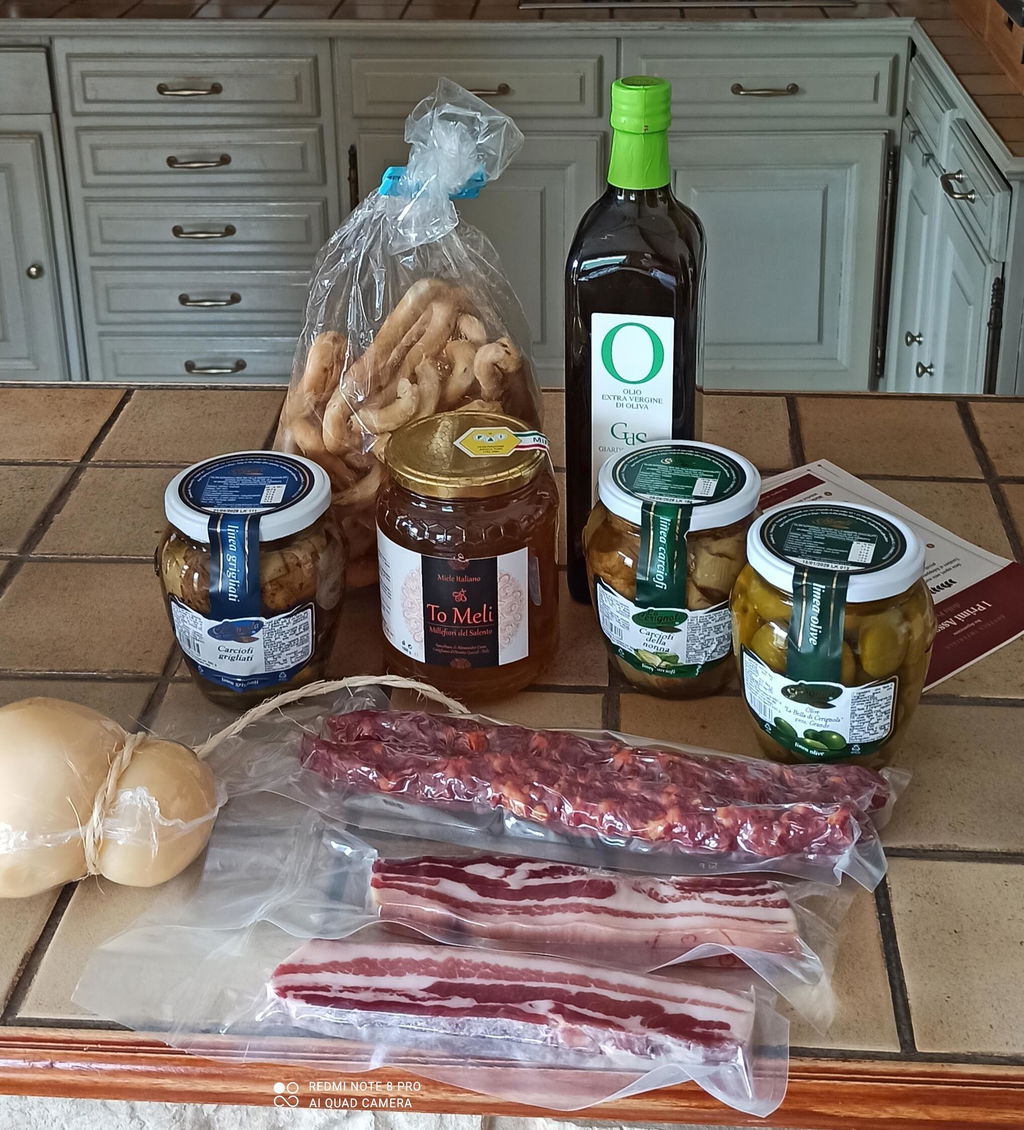
Caciocavallo is not named that way by chance. The wheels, tied in pairs by their "heads," were hung "astride" (a cavallo) a beam to age. The flask shape was born from that gesture, and it has never changed.
This is a stretched-curd caciocavallo made from Podolica cow's milk, produced in Puglia. Semi-aged: about 100 days, facilitated by the small size of the wheel. The paste is compact, straw-yellow, with a thin, edible rind. It has the scent of fresh milk with herbaceous notes from the pastures.
On the palate, it is bold yet sweet, elastic, and stringy. It does not bite. It is a noble cheese that does not overpower the rest of the table.
The wheel arrives vacuum-packed and labeled, in a freshness-preserving bag. The weight may vary slightly: that is the nature of an artisanal product.
PRODUCT SHEET
- Type: stretched-curd cheese
- Milk: free-range cow's milk from Pugliese farms
- Ingredients: milk, salt, rennet. No preservatives or colorings
- Aging: semi-aged, approximately 100 days of maturation
- Format: wheel of approximately 500g (variable weight)
- Packaging: vacuum-packed and labeled
- Storage: 4–8 °C, best within 6 months of opening the packaging
- Origin: Gargano, Puglia, Italy.
HOW TO EAT IT
On a cheese board, with artisanal soppressata and a teaspoon of raw honey: the contrast between aged cheese and honey is a Pugliese classic. Toasted on homemade bread, warm and stringy. Grilled over coals. Baked, to add substance to lasagnas and savory pies. In the glass, a red wine like Guarano Negroamaro.
FREQUENTLY ASKED QUESTIONS
Is our caciocavallo DOP?
No. There is no DOP designation for this cheese. It is an artisanal caciocavallo made from Podolica cow's milk: its value lies in the breed, the pastures, and the processing, not in a label.
Why is it called caciocavallo?
The wheels are tied in pairs and hung "astride" (a cavallo) a beam during aging. The name comes from there.
Is the rind edible?
Yes. It is thin and edible.
Why is the indicated weight "approximately"?
Every wheel is handmade and loses weight naturally during aging. The weight may vary slightly from the nominal weight: it is the sign of an artisanal, non-industrial product.
Mini caciocavallo units available weighing approximately 500 grams.