Mimmo has been a butcher for 33 years. He hasn't changed his method.
He works only with pure pork, hand-selected. The meat is massaged with salt, black pepper, and spices, then stuffed into a netted casing and hung to dry according to his own schedule — not a production calendar.
The result is an artisanal Apulian capocollo that can be recognized by its cross-section: dense marbling, evenly distributed white fat, and a deep red color. No added water. No accelerators. Just meat and time.
It comes from the Daunian Sub-Apennines, the part of the Apulian hinterland furthest from tourism and closest to tradition. A territory where animal husbandry is still a serious business and artisanal cured meats are still made as they once were.
It arrives vacuum-packed, whole. Keep it refrigerated. Slice it thinly at room temperature.
How to enjoy it:
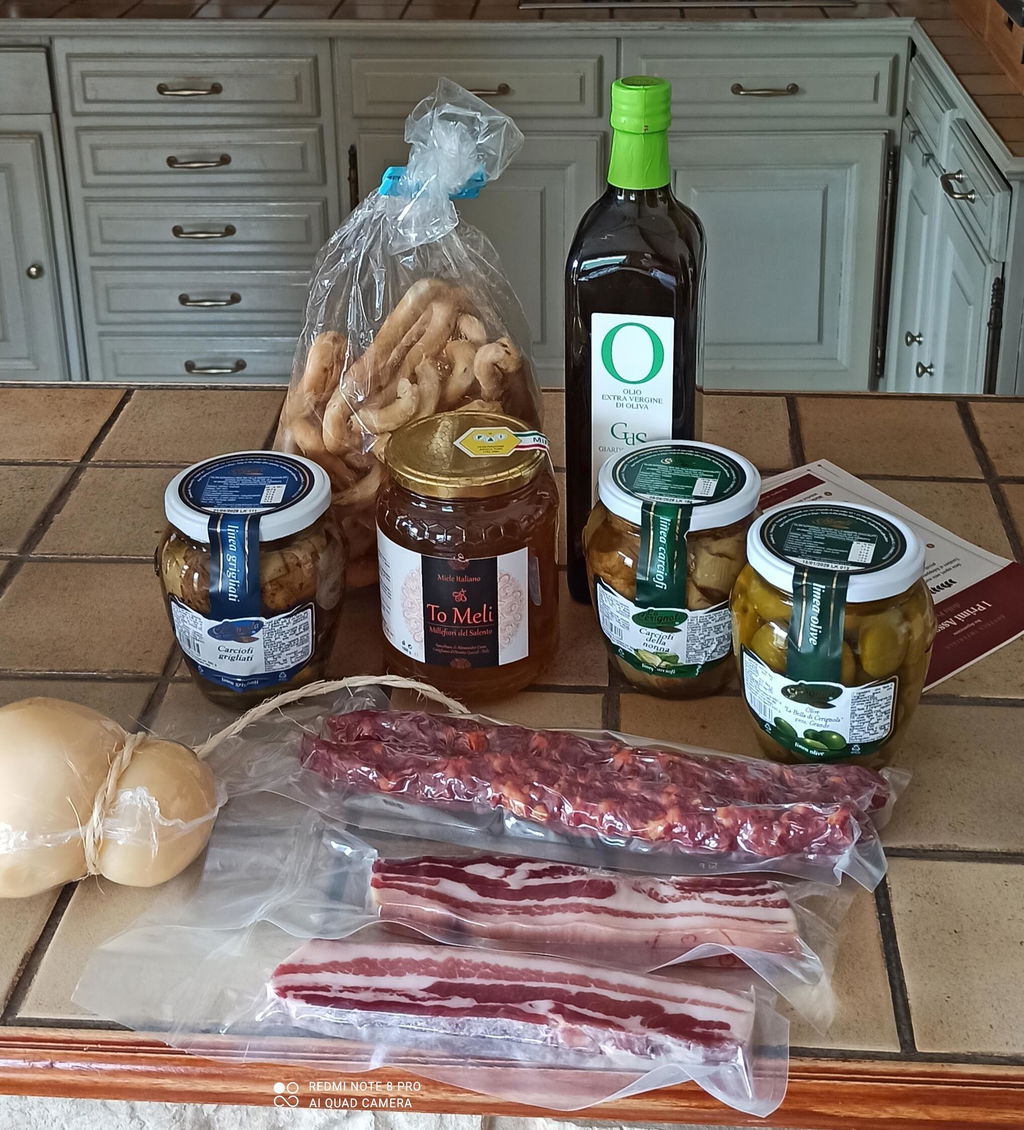
Sliced thinly on toasted Altamura bread. With an aged Apulian pecorino, a few Bella di Cerignola olives and a drizzle of extra virgin olive oil from Salento.
Pair with a Primitivo di Manduria or a pure Nero di Troia — wines that hold up to the savoriness of the meat without overpowering it.
It is one of the oldest Apulian cured meats. It needs nothing else.
Weight: approx. 850–950 g.
Ingredients: pure pork, salt, black pepper, natural spices.
Storage: +4°C, consume within 30 days of opening.