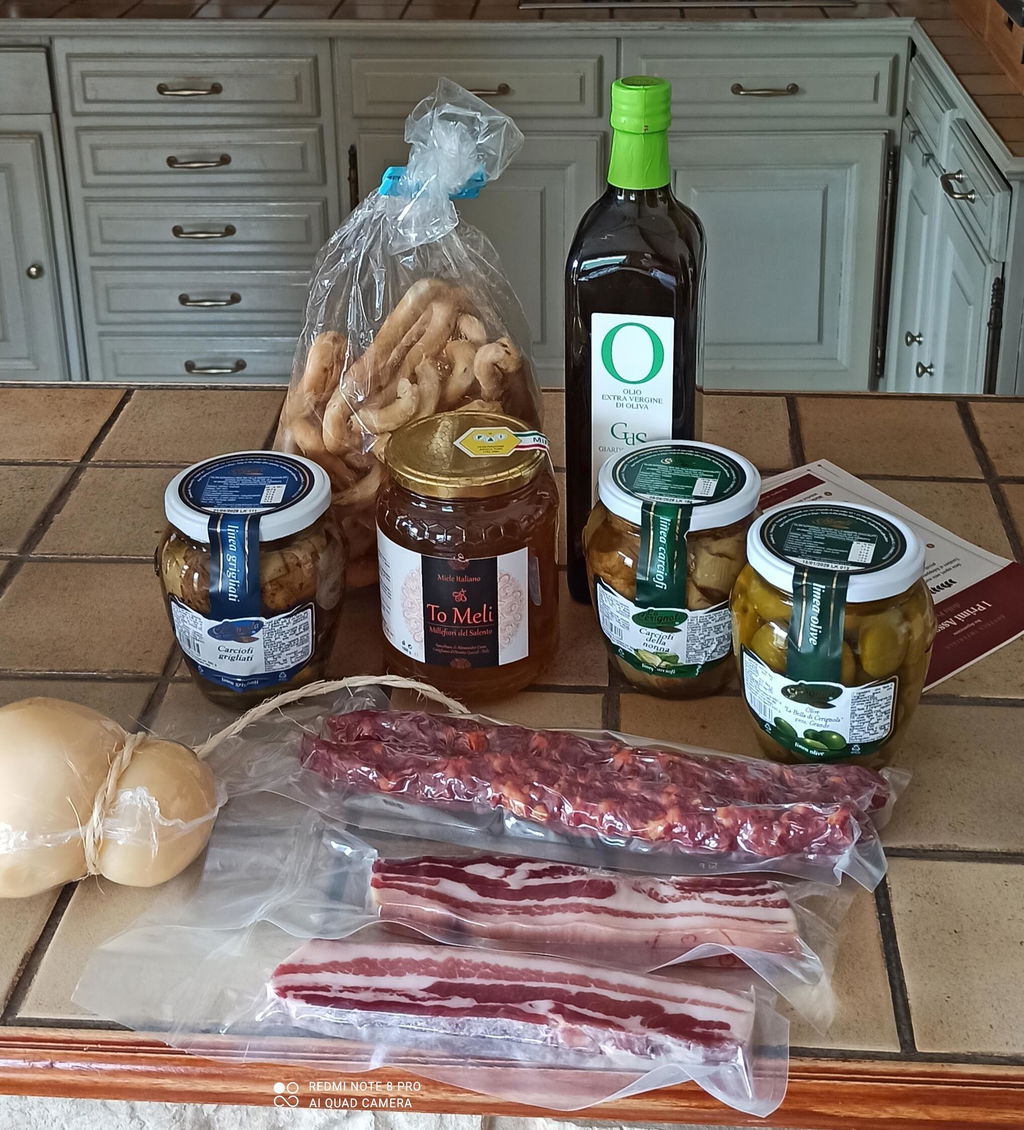
Typical Apulian products: how to recognize the real ones (and avoid the traps)
Do you remember the taste of the bread from the old days, freshly pressed oil, the cheese grandma kept in the pantry? Those flavors still exist. But finding them today is harder than it should be: between shelves full of "typical" products and storefronts designed for tourists, figuring out what is truly Apulian and carefully made requires a keen eye. The good news is that a few checks—always the same ones—are all you need. Here they are.
-
Read the label: "Puglia" alone is not enough
An honest label states who produced it and where. Be wary of generic phrasing: "product of Puglia" without a municipality, province, or company name tells you almost nothing. Look for the producer's name, the company address, and, whenever available, the place of cultivation or processing.
You are not the only one who finds labels unclear: in a November 2025 study by GS1 Italy and Ipsos, 69% of respondents stated they struggle to find the information they are looking for, and 53% specifically look at the origin of the raw materials. If a product doesn't give you these details, ask for them. A good producer is happy to answer. -
Certifications: PDO, PGI, and organic
PDO and PGI marks indicate a verified link to the territory and a production protocol. Where they exist, they are an added guarantee, and a serious seller won't hide them: they will highlight them and explain them to you. However, be careful not to make the opposite mistake: many excellent small producers do not have certifications because they are expensive and require bureaucracy. In that case, it matters even more to be able to know who is behind the product. -
Extra virgin olive oil: the most useful test
Oil is among the most imitated products, so it is a good example of how to reason. On the bottle, check:
• The category: "extra virgin olive oil," with the wording that defines it as obtained directly from olives and solely by mechanical means.
• The origin: "100% Italian" is more traceable than "blend of EU oils" or "EU and non-EU oils."
• The harvest campaign: it is not mandatory, but it indicates how fresh the oil is.
• The producer: name and registered office of the company, not just the bottler.
One last clue concerns the price. Various industry guides agree on one point: a liter of extra virgin oil sold for very little, under 6-7 euros, is unlikely to come from a carefully managed supply chain, because producing good oil costs money. It is not an absolute rule, but it is a good warning sign. Always compare the price per liter, not the price of the individual bottle. -
Be wary of anything too cheap or too "typical"
At markets and in tourist shops, you may find industrial cheeses with dialectal names, pasta presented as fresh but actually frozen, or products with suspicious shelf life. A useful signal: those who do good work are happy to talk about their product, can tell you how they make it, and where the raw material comes from. If the answers are vague, it is better to move on. -
How to trust when buying online:
Online you cannot taste, and it is normal to have some doubts. Here is what to look at before ordering:
• Real photos of the product and the label, not just catalog images.
• Descriptions that indicate ingredients, origin, and producer, not just adjectives.
• A shop that responds: a phone number or contact person to ask questions, with quick response times.
• Clear shipping and return policies, written before the purchase.
• Stories of real people and companies behind the products.
A simple rule: if you cannot figure out who made the product before buying it, don't buy it.

Why do small producers make the difference?
The flavors we remember usually don't come from large supply chains, but from people working on small quantities, with ingredients and rhythms that industry cannot replicate. For this reason, at Bottega Imperiale, we work with small Apulian producers: we are convinced that the flavors of the past are still there, you just need to know where to look for them.
"Small producers, Great stories" is the criterion we use to choose what to put in our shop because we go and meet them personally.
Where to start:
If you want to rediscover those flavors without risking imitations, you can start with these categories in our shop:
• Oil, sauces, and condiments
• Authentic Apulian preserves
• Baked goods
• Aperitifs
Shipping is free for orders over 89 euros. And if you have a doubt about a product, an origin, or a pairing, write to us on WhatsApp at (+39) 3508524863 or call us at (+39) 3760440387: we are happy to answer your concerns about online shopping.
Are you nostalgic for the products of the past? Discover what Bottega Imperiale offers → www.bottegaimperiale.it