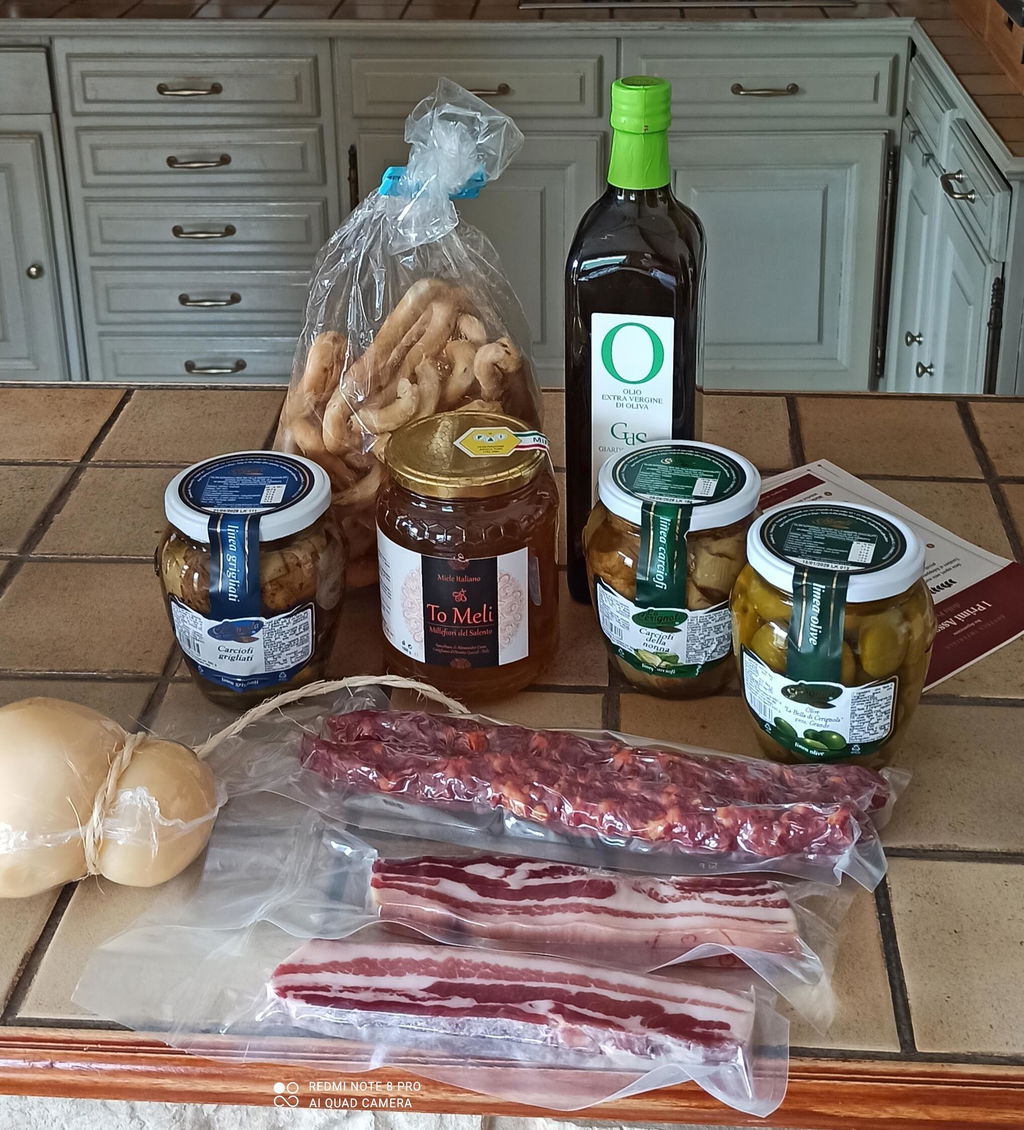
The largest green olive in Italy comes from the Tavoliere delle Puglie...
Condividi
Pick one up. The first thing you notice is that it doesn’t quite fit between two fingers.
The large green Cerignola olives are among the biggest table olives in the world. But size is just the beginning. The real surprise comes when you bite into it: no aggressive bitterness, no overpowering flavor. The flesh is firm, almost meaty, and the taste is sweet, buttery, and clean. An olive you can eat with your eyes closed, one after another, without getting tired of them.
This jar is full of those.
An olive to be eaten, not "used":
Many olives are meant to be blended, pitted, or hidden inside something else. Not this one.
The large green Cerignola olive is still harvested unripe, when it is at its peak in terms of texture and its color is bright green. Then, it is cured in water and placed in brine. No coloring, no tricks to make it look greener than it is. The green is its own.
It is the quintessential aperitif olive. But it is also much more.
How to serve it
On its own, straight from the fridge, with a glass of crisp white wine. It’s perfect just like that.
If you want to take it further:
- Pit it and sauté for a few minutes with cherry tomatoes and capers, then toss with pasta.
- Add it to focaccia along with tomatoes and oregano.
- Serve it with a selection of cheeses: its sweetness cleanses the palate between one taste and the next.
- Fill it with cream cheese or an anchovy, as they do in homes across the South.
A tip: take it out of the fridge a few minutes before serving. At room temperature, the aroma opens up.
Nutritional properties: good fats, in moderation
The olive is a fatty fruit. And that’s fine, because it is the right kind of fat.
Here is the data, based on 100 grams of green table olives (USDA reference):
- About 115-145 kcal, depending on the preparation. Almost all the calories come from fat.
- Fats: about 11 g, the majority of which is monounsaturated fat — mainly oleic acid, the same "good fat" found in olive oil.
- Polyphenols and Vitamin E. These are the olive’s natural antioxidants. Polyphenols are also the reason why raw olives are bitter: some remain even after curing.
- Fiber. Green olives contain more than black ones.
- Phytosterols, beta-carotene, lutein. Plant compounds present in trace amounts, typical of the fruit.
A fair note, because at Bottega Imperiale we believe in full transparency: table olives are preserved in brine, so they are high in sodium. Excellent as part of a meal, enjoy in moderation if you are keeping an eye on your salt intake. The usual advice remains the best: a few, high-quality, and without rushing.
Information provided for educational purposes only; it does not replace medical or nutritional advice.
Who produces them:
Mario Iaculli — Cerignola (FG), in the heart of the Tavoliere plain.
The Iaculli family has been working here for over fifty years. Mario oversees production and sales along with his brother and wife. Not an anonymous warehouse: a name, a certification, a precise location, and expert hands.
There is often confusion regarding the designation "La Bella di Cerignola" / DOP "La Bella della Daunia" and the name of the cultivar.
Bottega Imperiale. The sincere flavors of Puglia, just like they used to be. You can find them by clicking here 👈