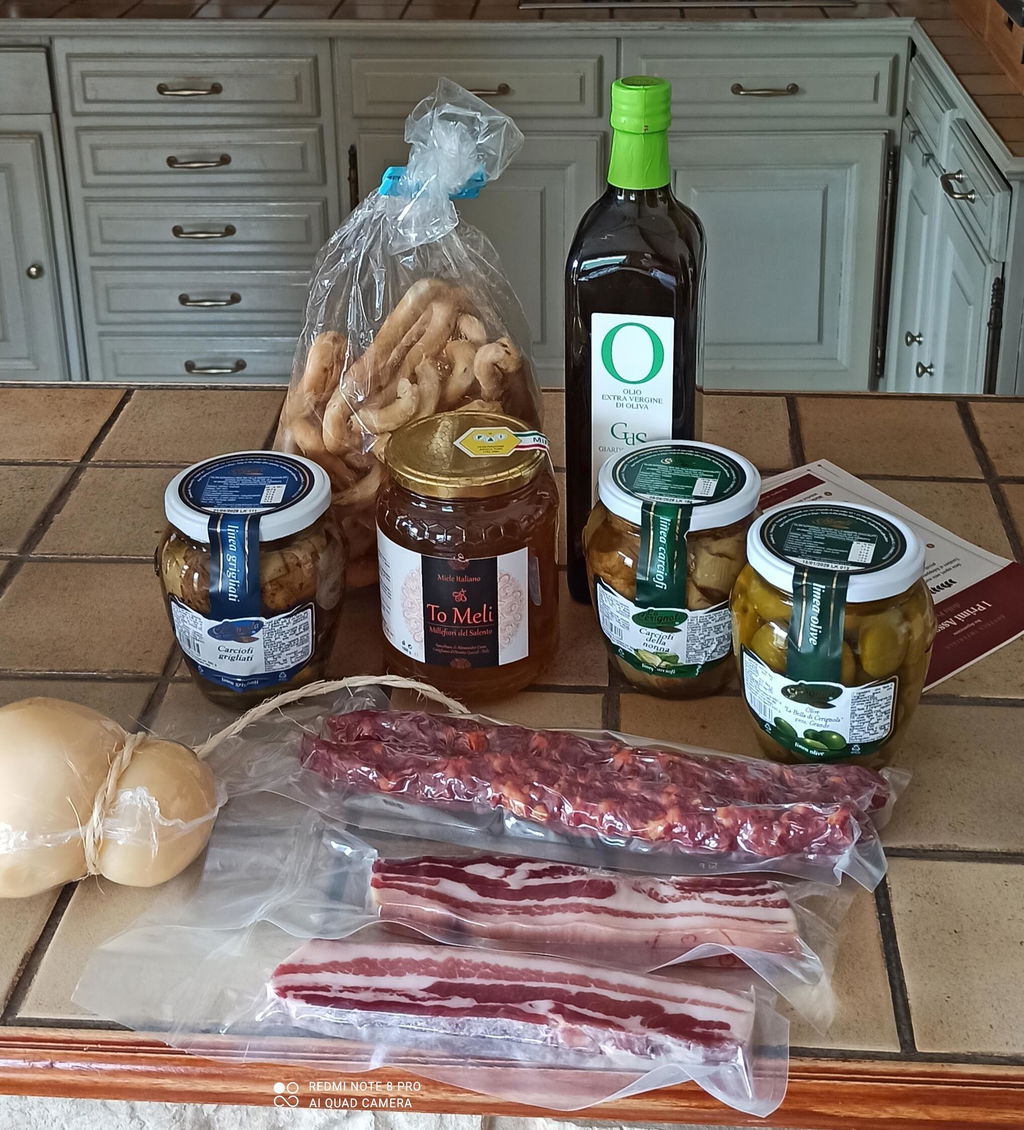
Discovering Apulian Taralli: Tradition and Creativity in a Single Bite
There is a sound that we all know in Puglia: that crisp, cheerful crunch that accompanies a chat on the doorstep, a glass of wine with friends, or returning home after a day of work. It is the sound of a tarallo being broken. Small, golden, and seemingly humble, the Pugliese tarallo holds within its twisted circle centuries of history, the work of skilled hands, and the fragrance of a generous land.
At Bottega Imperiale, we call them “honest flavors”: foods that don't need too many words because they speak for themselves. In this article, we take you on a journey to discover taralli — from their peasant origins to today’s most creative interpretations — and explain why choosing the right ones truly makes a difference.
A circle of history: the origins of the tarallo
The roots of the tarallo lie in the peasant cuisine of Southern Italy, when nothing could be wasted. Dough left over from making bread was used to create small rings that could be boiled and preserved for a long time: this is how nutritious, inexpensive snacks were born, capable of lasting for weeks in the pantries of farming families.
The name itself tells a journey. According to some, it comes from the Greek daratos (a type of bread), while others trace it to the Latin torrere, “to toast,” or from the Old French danal. Whatever the truth may be, one thing is certain: the tarallo has always been a food of home, of sharing, and of simple celebration. A food that spans generations, bringing with it “almost forgotten” flavors—the flavors of the past.

The soul of the tarallo: few ingredients, lots of truth
The secret to a great tarallo lies not in complexity, but in quality. The traditional Pugliese recipe can be counted on one hand: wheat flour, extra virgin olive oil, white wine, and salt. Nothing else. And this is exactly where it all happens.
A fruity and rich Pugliese extra virgin olive oil completely changes the character of the product. The white wine provides crispness and that unmistakable aroma. The production process—kneading, rolling by hand, twisting, and above all the double cooking—is a ritual that requires time and craftsmanship.
Boiled and then baked: the step that makes the difference
The traditional tarallo goes through two heat sources. First, it is boiled in water until it rises to the surface; then it is baked until it becomes golden and crunchy. It is this step, often skipped in industrial production, that gives the artisanal tarallo its inimitable texture: crunchy on the outside, fragrant on the inside. A detail you can feel with the very first bite.
Traditional variations
Every town, and almost every family, has its own version. But some variations have become icons of Pugliese taste:
-
Fennel seed — the most loved: fennel seeds flavor the tarallo and make it irresistible with cured meats and cheeses.
-
Black pepper — bold and spicy, perfect for those who love contrasts.
-
Chili pepper — a warming bite, increasingly popular today.
-
White wine — the most classic and delicate version, suitable for any occasion.
-
Lard and pepper (“taralli 'nzogna e pepe”) — crumbly and delicious, a small indulgence of tradition.
From large, crunchy rounds to small “scagliozzi” for aperitivos, the world of taralli is a universe of shapes, sizes, and intensities waiting to be explored.
Tradition meeting creativity
Preserving tradition doesn't mean standing still. The most passionate small-scale Pugliese producers are reinventing the tarallo without ever betraying its soul. This leads to new interpretations designed for curious and demanding palates:
-
With olives, sun-dried tomatoes, or onion, for a bite already rich with the taste of the South.
-
With turmeric, sesame seeds, or toasted wheat, blending color and toasted notes.
-
Whole wheat or ancient grain versions, for those seeking more rustic and authentic flavors.
-
Sweet versions, with cooked grape must or almonds, to serve at the end of a meal.
Creativity, when rooted in respect for raw ingredients, does not drift away from tradition: it keeps it alive, bringing it to new tables and new people. This is exactly the spirit we look for when we select our artisans.
How to best enjoy taralli
The beauty of the tarallo is its versatility. On their own, they are already a pleasure, but they also enhance whatever surrounds them:
-
At the table: they replace bread and accompany soups, legumes, and vegetables.
-
At aperitivo: with a platter of cured meats, Pugliese cheeses, and a glass of local wine.
-
On the go: light, durable, and always ready, they are the perfect snack.
-
As a gift: in a curated box, they tell the story of Puglia better than a thousand words.
Bottega Imperiale’s taralli: small producers, great stories.
At Bottega Imperiale, we don’t look for the cheapest tarallo, but the most authentic one. Every item that enters our store is born from the hands of small Pugliese producers who still knead, roll, and bake following the timing and methods of the past. No shortcuts, no compromises on taste.
This is our mission: to bring back to the table those almost forgotten flavors, the honest ones of old, and to build paths and experiences designed for those who won't settle. Because a good tarallo is not just a snack: it is a piece of Puglia to share.
Taste the real Puglia.
Discover our selection of artisanal taralli and boxes dedicated to Pugliese flavors by clicking here. One bite, and you will understand the difference.